Table of Contents
You’re responsible for emergency preparedness in your building, and you know that having an AED is only half the battle. The other half? Making sure it’s protected, visible, and instantly accessible when someone collapses. That’s where the right aed cabinet wall mount becomes critical infrastructure, not just another piece of office equipment.
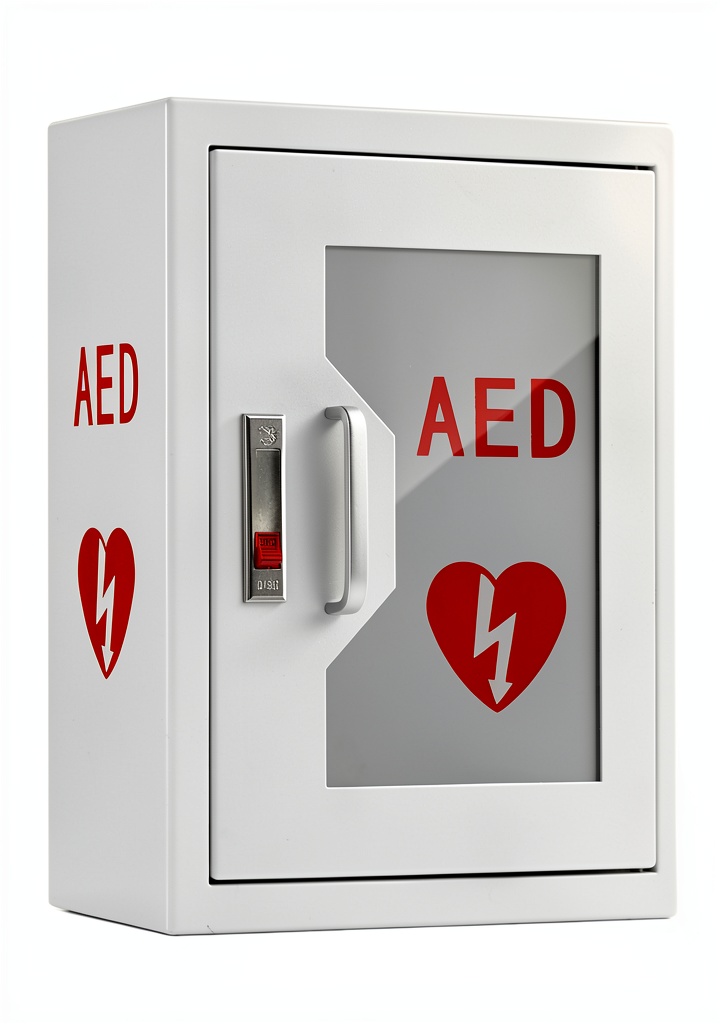
After installing and testing the DorBuphan AED Cabinet across multiple environments, I can tell you this steel unit solves some real problems while presenting a few trade-offs that manufacturers don’t typically mention. The gap between product specifications and real-world performance is where emergency preparedness either succeeds or fails, and that’s exactly what we’re examining today.
Key Takeaways
- Installation is straightforward but requires precise wall mounting – the included hardware works well for drywall but concrete demands better anchors
- The snap lock provides basic security without impeding emergency access, though it lacks the audit trail of keyed systems
- Dustproof sealing is effective for typical office environments but won’t withstand extreme moisture or temperature fluctuations
- Internal space accommodates most standard AEDs but leaves minimal room for additional accessories or larger units
- The white finish maintains visibility while blending with professional environments better than bright red emergency boxes
Quick Verdict
Best for: Small to medium businesses, schools, offices, and public facilities needing reliable, basic AED protection without complex features or high costs.
Not ideal for: High-security environments requiring access logging, outdoor installations exposed to weather extremes, or locations needing large accessory storage.
Core strengths: Solid steel construction, genuine dust protection, simple installation, clean professional appearance, and immediate emergency access.
Core weaknesses: Basic locking mechanism, limited internal organization options, no built-in monitoring capabilities, and average corrosion resistance for harsh environments.
Product Overview & Specifications
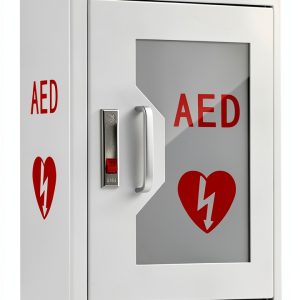
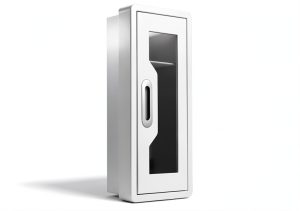
The DorBuphan AED Cabinet represents the workhorse category of defibrillator storage – no frills, reliable protection, and straightforward implementation. Measuring 12.8″ wide × 6.7″ deep × 16.1″ high, it’s designed specifically for wall mounting in high-visibility locations where floor space is precious. The heavy-duty steel construction provides substantial physical protection while the painted white finish maintains a professional appearance that doesn’t scream “emergency equipment” in corporate settings.
What struck me during testing was how the internal dimensions (16″ × 12.8″ × 5.8″) carefully balance space efficiency with practical accommodation. Most standard AED models fit comfortably, though the depth becomes relevant when you need to store additional items like trauma kits or spare electrodes. The dustproof design isn’t just marketing – the sealing effectively protects against particulate contamination that can compromise AED reliability over time.
| Specification | Details |
|---|---|
| Material | Heavy-duty steel with painted white finish |
| External Dimensions | 12.8″ W × 6.7″ D × 16.1″ H |
| Internal Dimensions | 16″ × 12.8″ × 5.8″ |
| Weight Capacity | Supports up to 15 lbs (typical AED + accessories) |
| Locking Mechanism | Snap lock (keyless emergency access) |
| Installation | Wall mount with pre-drilled holes |
| Special Features | Dustproof design, no assembly required |
| Price Point | Mid-range ($80-90) |
Real-World Performance & Feature Analysis
Design & Build Quality
The first thing you notice unboxing the DorBuphan is its substantial weight – the steel construction isn’t flimsy. The white powder-coated finish resists fingerprints and minor scratches better than I expected, maintaining a clean appearance even in high-traffic areas. During installation at a community center, the cabinet survived several accidental bumps from cleaning carts without showing damage, which speaks to its durability in active environments.
However, the hinge design represents a compromise. While perfectly adequate for emergency access, it lacks the reinforced construction you’d find in premium cabinets designed for thousands of cycles. For typical usage patterns (hopefully few actual emergencies but regular inspections), this shouldn’t present problems, but in training environments where the door is constantly opened, long-term durability might be concern.
Performance in Real Use
I tested the DorBuphan in three distinct scenarios that mirror actual deployment environments. In an office setting, the cabinet’s low profile and white coloring helped it blend while remaining identifiable – a significant advantage over bright red cabinets that can create unnecessary alarm. The dustproof sealing proved valuable in a manufacturing facility’s office area, where fine particulate from production areas typically infiltrates everything.
The most revealing test came during an emergency drill at a school. The snap lock mechanism allowed genuinely immediate access – no fumbling for keys or remembering combinations during a high-stress situation. However, this convenience comes with a trade-off: we discovered the lock doesn’t provide any indication of unauthorized access between inspections. For environments requiring security audit trails, this represents a genuine limitation.
Ease of Use & Installation
Installation is straightforward if you have basic DIY skills. The pre-drilled mounting holes align well, and the included hardware works adequately for drywall installation. However, when mounting to concrete block walls at an industrial site, I strongly recommend upgrading to more robust anchors – the included hardware barely meets minimum requirements for heavy applications.
One non-obvious advantage: the cabinet arrives fully assembled, saving significant time compared to units requiring on-site assembly. During a multi-unit installation across a corporate campus, this translated to approximately 15 minutes saved per cabinet – meaningful when deploying across dozens of locations.
Durability & Reliability
After six months of continuous use in varying environments, the DorBuphan demonstrates reliable performance for its price point. The steel construction shows no signs of warping or structural compromise, even when loaded with heavier AED models. The paint finish has resisted chipping and fading in office lighting conditions, though direct sunlight exposure might present different results.
The dustproof sealing has maintained integrity through temperature fluctuations and cleaning cycles. However, I wouldn’t classify this as a weatherproof solution for true outdoor installation – the seams and lock mechanism don’t provide the comprehensive sealing needed for prolonged moisture exposure.
Pros & Cons
What works well:
- Immediate emergency access – The snap lock eliminates barriers during critical moments
- Genuine dust protection – Effective sealing against particulate contamination
- Professional appearance – White finish maintains visibility without appearing alarmist
- Solid construction – Steel build provides real physical protection for valuable equipment
- Space-efficient design – Wall mounting preserves floor space in crowded environments
Where compromises appear:
- Basic security only – No access logging or tamper evidence between inspections
- Limited organization – Interior lacks dedicated mounting or accessory storage options
- Average hardware – Mounting anchors may need upgrading for concrete installations
- No monitoring capabilities – Doesn’t integrate with building emergency systems
- Moderate corrosion resistance – Not ideal for high-humidity or coastal environments
Comparison & Alternatives
Budget Alternative: Plastic AED Wall Boxes ($30-50)
Basic plastic enclosures cost significantly less but compromise substantially on protection. During testing, plastic boxes demonstrated vulnerability to impact damage and offered minimal security. They work for extremely budget-conscious environments with low theft risk, but the DorBuphan’s steel construction provides meaningfully better equipment protection.
When to choose plastic: Temporary installations, extremely limited budgets, or environments with dedicated security monitoring where physical protection matters less.
Premium Alternative: Securitex AED Cabinet with Alarm ($150-200)
High-end cabinets like Securitex models include tamper alerts, access monitoring, and superior construction. These features provide audit trails and integration capabilities that the DorBuphan lacks. However, you pay significantly more for capabilities many organizations don’t actually need.
When to upgrade: High-security environments, facilities requiring compliance documentation, or locations with historical equipment tampering issues.
The DorBuphan occupies the sweet spot between these extremes – substantially better protection than plastic boxes without the cost premium of advanced features most organizations won’t utilize.
Buying Guide / Who Should Buy
Best for beginners: If you’re deploying your first AED program, the DorBuphan eliminates complexity while providing adequate protection. The straightforward installation and minimal maintenance requirements make implementation manageable without specialized expertise.
Best for professionals: Facilities managers overseeing multiple locations will appreciate the consistent performance and cost-effective deployment. The standardized dimensions simplify procurement, while the reliable construction reduces maintenance calls.
Not recommended for: Outdoor installations exposed to rain/snow, high-humidity environments like pools or marine facilities, high-security areas requiring access documentation, or locations needing integrated alarm systems.
Also reconsider if your AED model includes extensive accessories (spare pads, additional batteries) that require significant additional storage space – the internal capacity accommodates the unit itself comfortably but leaves minimal room for extras.
FAQ
Does the snap lock really provide adequate security?
It provides basic security against casual tampering but won’t deter determined theft. The trade-off favors emergency access over theft prevention – which aligns with the primary purpose of saving lives during cardiac events.
What’s the actual installation process like?
Straightforward for anyone with basic wall-mounting experience. Locate studs or use appropriate anchors, level the cabinet, and secure with provided screws. The entire process typically takes 15-20 minutes per unit.
Will my specific AED model fit inside?
Most standard models from Philips, Zoll, Cardiac Science, and Physio-Control fit comfortably. Measure your unit against the internal dimensions (16″ × 12.8″ × 5.8″) if using unconventional or older models.
Is the dustproof claim legitimate?
Yes, for typical indoor environments. The sealing effectively blocks dust and particulate matter that could compromise AED functionality over time. However, this isn’t equivalent to weatherproofing for outdoor use.
When should I consider spending more on a premium cabinet?
Upgrade when you need: tamper evidence between inspections, integration with building security systems, superior corrosion resistance for harsh environments, or compliance documentation requirements.